
Market summary
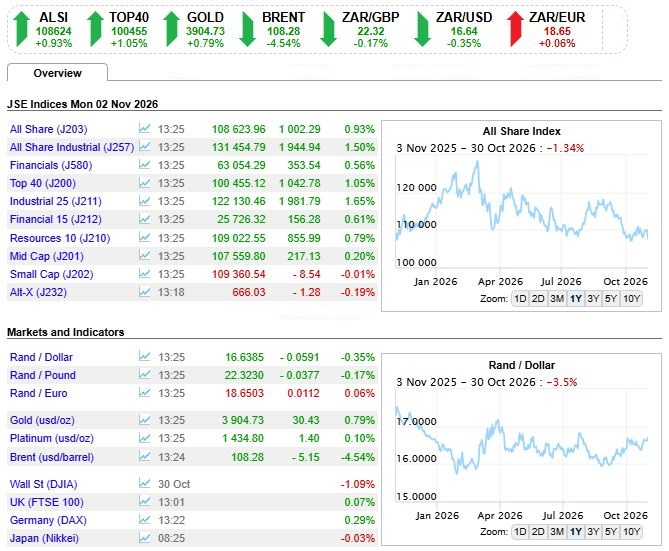
The JSE All Share closed the week at 107 621.31 decreasing by 0.37%. The biggest contributing sector was the consumer discretionary sector, adding 1.75% while the basic materials sector decreased by 3.01% during the same period.
Looking globally, developed markets decreased by 0.24% (USD) during the week. Emerging markets decreased by 0.72% (USD) during the same period.
Local events
• South Africa’s producer inflation rose to 6.2% in September, above expectations of 5.7%, driven largely by sharp increases in diesel, petrol and petroleum product prices.
• South Africa recorded a R20.0 billion budget surplus in August 2026, signalling an improvement in government finances and supporting the country’s fiscal outlook.
• South Africa’s trade surplus widened to R19.8 billion in September, supported by a 5.1% rise in exports, led by precious metals, base metals and mineral products.
Global events
• The Federal Reserve kept interest rates unchanged at 3.75%–4.00% in October, following September’s 25-basis-point hike, as inflation remained elevated despite resilient economic growth.
• US core PCE inflation rose to 3.1% year-on-year in September, its highest since May, remaining above the Fed’s 2% target and reinforcing concerns over persistent inflation.
• The ECB kept its main refinancing rate at 2.65% and deposit rate at 2.50%, citing continued inflation risks from elevated energy prices.
Thanks to PPS Investments for the weekly Market Summary.
Financial indicators by Sharedata.co.za
SA’s economy gets R371bn boost on paper as Moody’s upgrade looms
South Africa’s revised economic figures could bring forward a credit-rating upgrade, with Investec chief economist Annabel Bishop expecting Moody’s to lift the country’s rating in the near term. See whats being said in IOL Business here>
ECONOMIC WEEK AHEAD | Petrol and diesel prices set to fall despite global spike
Th department of mineral & petroleum resources is likely to announce on Monday a reduction in petrol and diesel prices for November, as anoher temporary cut in the general fuel levy offsets higher global oil prices that would otherwise have pushed prices up further. See what else is happening in South Africa in the BusinessDay article here>
Godongwana says SA’s GDP lift creates fiscal headroom
The upward revision of South Africa’s gross domestic product (GDP), following a regular recalculation of how the economy is measured, creates fiscal headroom for the country, Finance Minister Enoch Godongwana said on Friday evening. See the full article in Moneyweb here>
Good news about interest rates in South Africa
South Africa’s central bank chief said its models suggest that its current policy approach will bring inflation down to its 3% goal once the initial shocks triggered by the ongoing conflict in the Middle East fade. Read the full Businesstech article here>
Gold rises on softer oil; markets parse Fed signals
Gold prices bounced on Monday, after a selloff in the previous session, as weaker oil prices tempered inflation concerns, while investors assessed comments from the Federal Reserve for clues on the path of US interest rates. See the full MarketScreener article here>
European stocks flat, oil drops as midterm caution prevails
European stocks struggled for direction on Monday after Friday’s tech rout, with investors looking ahead to Apple’s earnings and taking comfort from a sharp fall in oil prices amid hopes for a deal to end the Iran war. Read the full Yahoo! Finance here>
Stock futures rise to start busy week as oil prices tumble, tech rebounds: Live updates
Stock futures moved higher Monday as oil prices fell sharply and tech names rebounded, while investors braced for a packed week of earnings results, jobs reports and the upcoming midterm elections. Get the latest global news from CNBC.com here>
Elections & market volatility
It’s all about elections which take center stage! Brazilians returned to the polls on 25 October, Israel voted on 27 October, the US follows with midterms on 3 November and South African voters head to the polls for local government elections on 4 November. Last week proved once again that markets hate surprises – Brazil showed the cost.
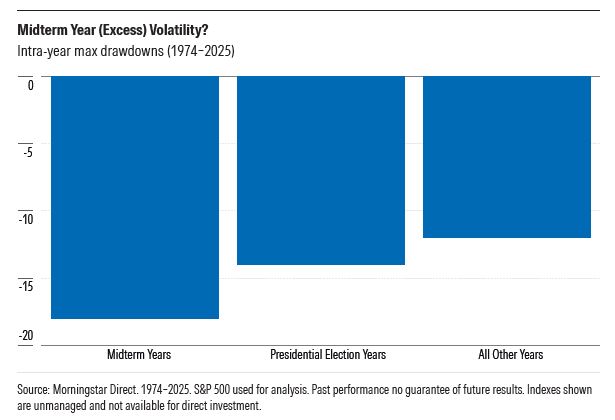
US midterm election years have typically been volatile (see chart below) but with enormous AI capex, mega IPOs, ongoing conflicts, a new Fed Chair, and sticky inflation – this year was bound to keep market watchers on their toes.
The last few weeks have been bumpy, but volatility can create opportunities for long term investors.
In the chart below it shows that in midterm election years, the US market tends to be more volatile compared to other years. Midterm years have experienced an average drawdown of 18% since 1974. Notably, this is steeper than the declines recorded during presidential election years and compared to all the other years without elections according to Morningstar.
Are there any potential surprises? Markets are currently putting little odds on Republican House.
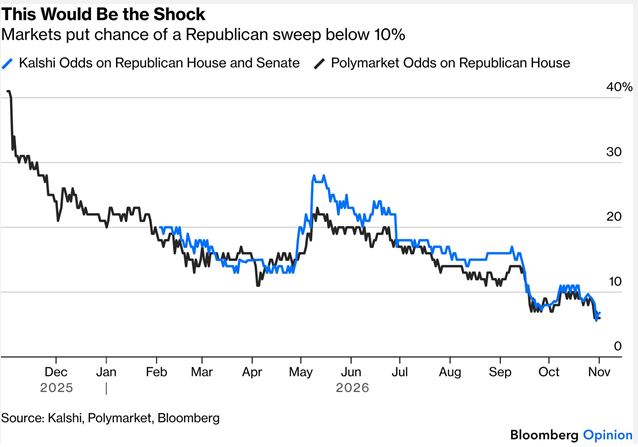
Thanks to Ninety One for this election insight.